Your Words Begin Here. Welcome to The Authors Point
Your Words Begin Here. Welcome to The Authors Point

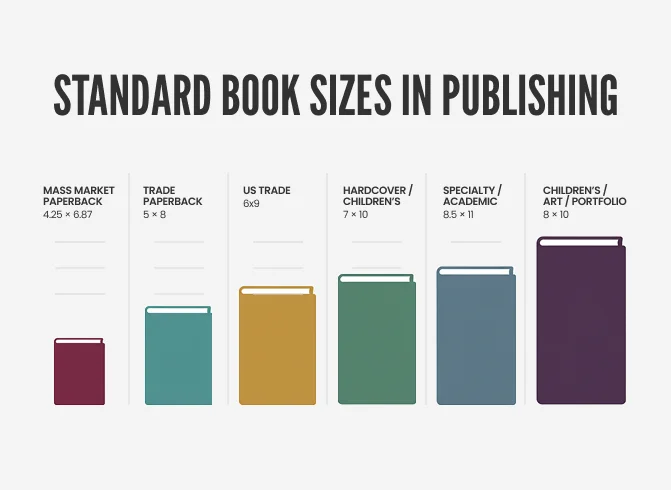
Choosing the right book size affects everything from printing costs to reader experience. In publishing, trim size refers to the final dimensions of a book after pages are cut to ensure uniformity. It's expressed as Width × Height and measured in inches in the U.S.
Understanding standard book sizes helps you make confident decisions that align with genre expectations while controlling production costs.
| Genre | Popular Sizes | Best For |
|---|---|---|
| Fiction | 5.5" × 8.5", 6" × 9" | Novels, thrillers |
| Children’s | 7.5" × 7.5", 8" × 10" | Picture books |
| Non-Fiction | 6" × 9", 7" × 10" | How-to guides |
| Memoir | 5.25" × 8", 5.5" × 8.5" | Personal stories |
| Textbooks | 8.5" × 11" | Academic books |
| Comics | 6.625" × 10.25" | Graphic novels |
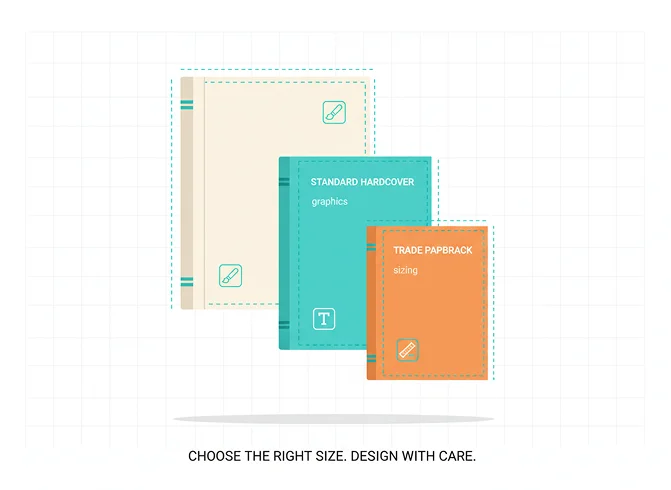
Different genres have established dimensions that readers recognize and expect:
 4.25" × 6.87" (mass market paperback)
5" × 8", 5.25" × 8"
5.5" × 8.5", 6" × 9" (most popular)
4.25" × 6.87" (mass market paperback)
5" × 8", 5.25" × 8"
5.5" × 8.5", 6" × 9" (most popular)
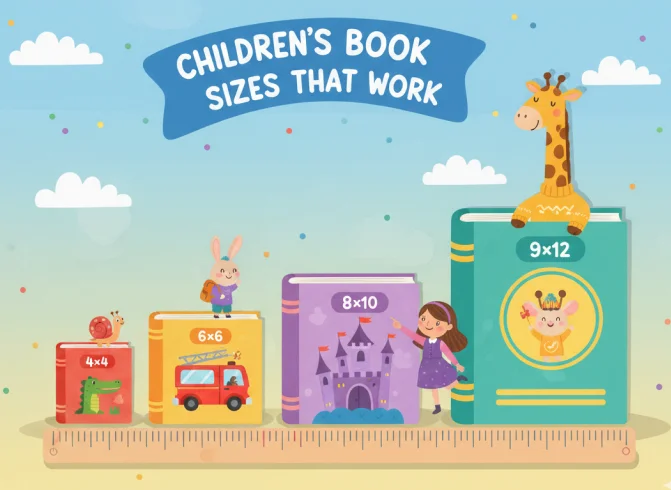 7.5" × 7.5" (square picture books)
7" × 10", 10" × 8"
5.5" × 8.5", 6" × 9"
7" × 10" (reference books)
5.25" × 8", 5.5" × 8.5"
6" × 9", 7" × 10"
8.5" × 11" (college textbooks)
7.5" × 7.5" (square picture books)
7" × 10", 10" × 8"
5.5" × 8.5", 6" × 9"
7" × 10" (reference books)
5.25" × 8", 5.5" × 8.5"
6" × 9", 7" × 10"
8.5" × 11" (college textbooks)
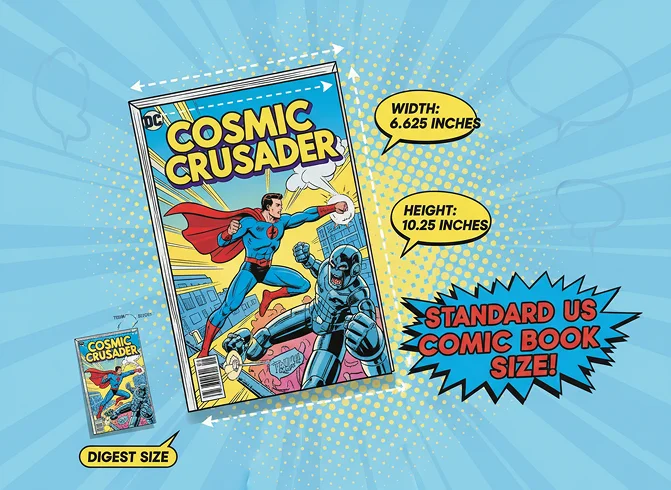 6.625" × 10.25" (industry standard)
5" × 7.5" (manga format)
6.625" × 10.25" (industry standard)
5" × 7.5" (manga format)
The average book size for novels is 6" × 9", offering excellent readability without bulk.
This book page size works beautifully for most fiction and non-fiction titles.
The comic book size dimensions have remained remarkably consistent. The standard average comic book size measures 6.625" × 10.25"a format used by Marvel and DC Comics. This comic book size provides enough space for detailed artwork while maintaining comfortable readability. Manga uses smaller 5" × 7.5" dimensions for portability.
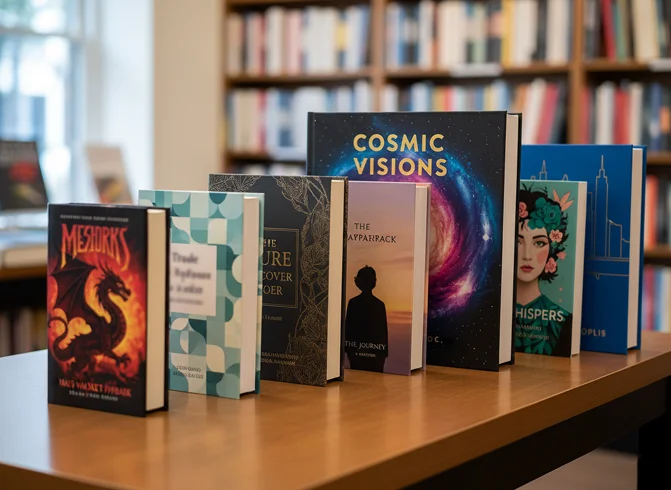
Your book cover size extends beyond trim size to include:
| Element | Specification |
|---|---|
| Bleed | 0.125" all edges |
| Spine Width | Based on page count |
| Outer Margins | 0.5" minimum |
| Gutter Margin | 0.75" minimum |
Professional book cover design services handle these calculations, ensuring perfect printing without trimming error
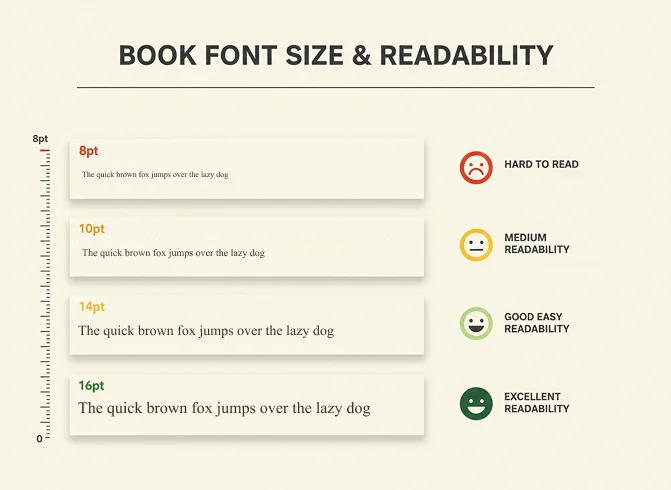
The book font size correlates with trim size and genre:
| Book Type | Body Text | Headers |
|---|---|---|
| Novels | 10-12 point | 14-16 point |
| Children's Books | 14-18 point | 18-24 point |
| Textbooks | 10-11 point | 14-18 point |
Larger children's book sizes accommodate bigger fonts for early readers, while standard novels use 11-point fonts for comfortable reading.
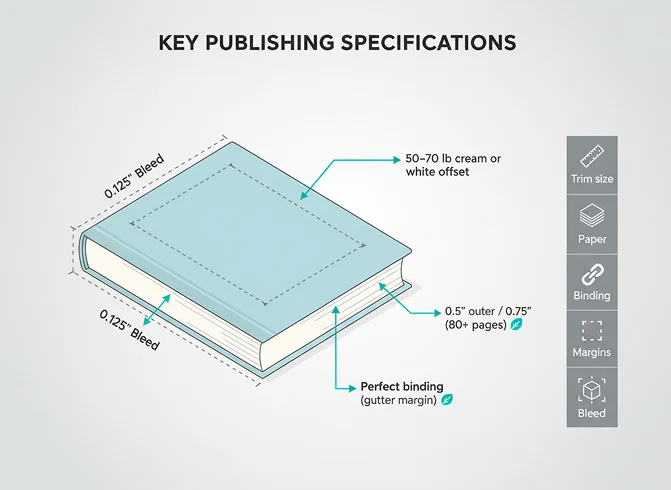
Beyond dimensions, technical specifications matter:
Interior: 50-70 lb cream or white offset
Cover: 80-100 lb coated stock
Perfect binding: 80+ pages
Saddle stitch: 8-48 pages
Case binding: Hardcover editions
These specifications align with book publishing standards across print-on-demand and traditional printing.
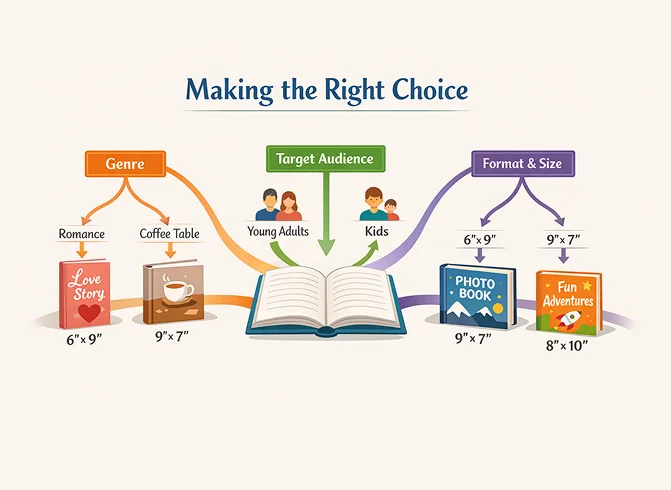
Follow these steps:
Research your genre - Browse bestsellers in your category
Consider production costs - Larger sizes increase printing expenses
Check distribution channels - Bookstores prefer standard sizes
Test readability - Print sample pages at different dimensions
When working with ghostwriting services or preparing for audiobook production, remember that physical dimensions only matter for print editions.
The right book size enhances your content while meeting reader expectations. Start with industry standards for your genre the 6" × 9" format works for most projects. Whether you're formatting your first manuscript or refining a passion project, these specifications provide the foundation for publishing success. Choose dimensions that serve your story, and your readers will notice the professional difference.